
Ayurveda and Modern Medicine in Diabetes Care
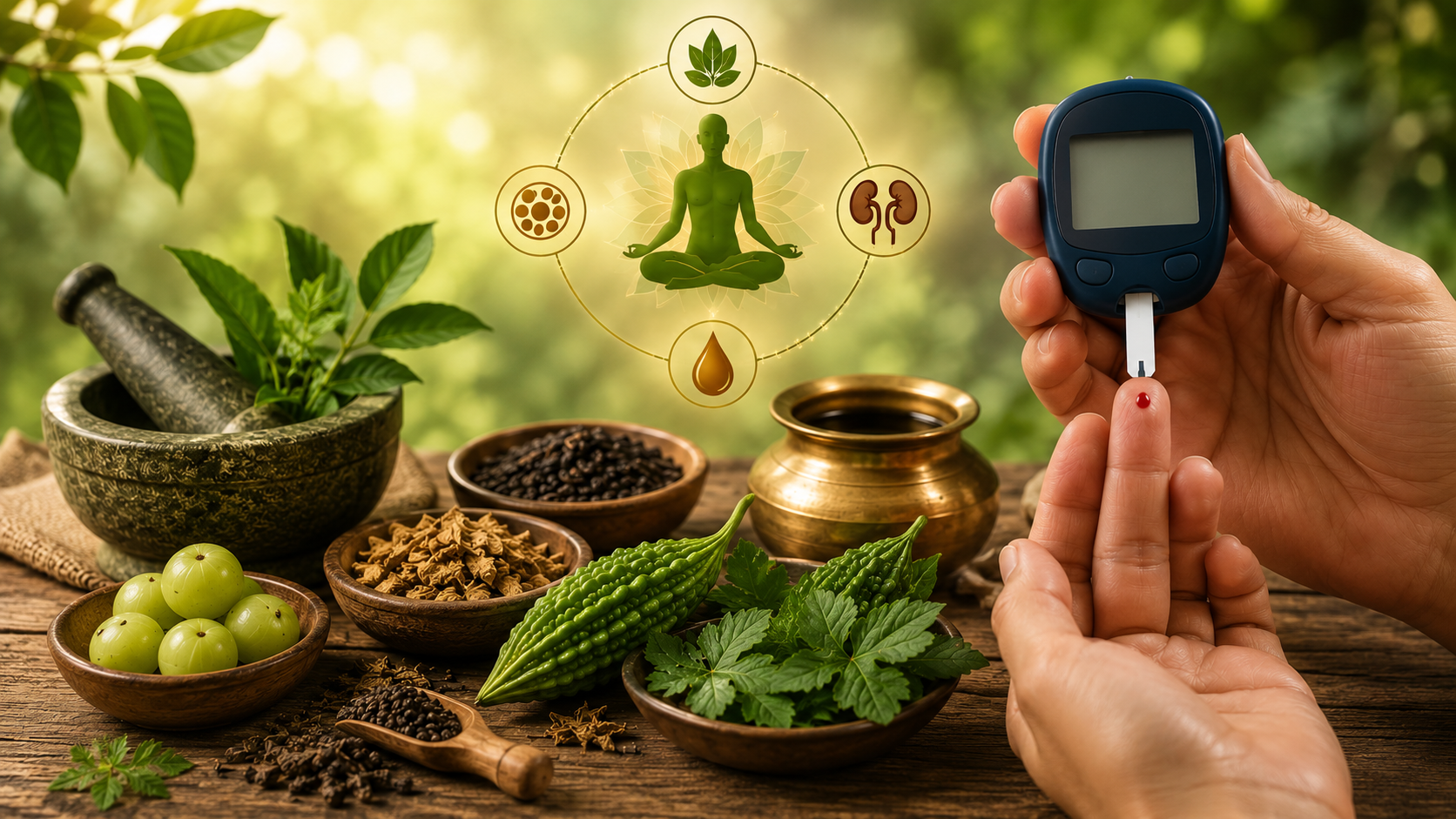
Diabetes is a complex metabolic disorder affecting millions worldwide. While modern medicine provides effective treatments, many are turning to complementary approaches like Ayurveda, which offers unique holistic protocols that include treatment, yoga, and dietary support for diabetes management.
Ayurveda operates on the principle of supporting the body’s natural healing processes, promoting organ function, and encouraging the pancreas to secrete its natural hormones through balanced diet and medicinal support.
TABLE OF CONTENTS
- Frequently Asked Questions
1. Approach: How Do Modern Medicine and Ayurveda Differ in Their Approach to Diabetes?
2. Diagnosis: What Are the Key Differences in Diagnosing Diabetes Between Modern Medicine and Ayurveda?
3. Classification: How Do Modern Medicine and Ayurveda Classify Different Types of Diabetes?
4. Focus: What Are the Primary Treatment Focuses for Diabetes in Modern Medicine vs. Ayurveda?
5. Medication: How Do Medication Approaches for Diabetes Differ Between Modern Medicine and Ayurveda?
6. Diets: What Dietary Recommendations Does Each Approach Offer for Diabetes Management?
7. Lifestyle: How Do Lifestyle Recommendations for Diabetes Compare Between Modern Medicine and Ayurveda?
8. Personalization: How Personalized Are the Diabetes Treatment Plans in Modern Medicine vs. Ayurveda?
9. Detox: What Role Does Detoxification Play in Each Approach to Diabetes Treatment?
10. Prevention: What Preventive Measures Does Each Approach Recommend for Diabetes Management?
- Success Story
1. Approach: How Do Modern Medicine and Ayurveda Differ in Their Approach to Diabetes?
Modern medicine focuses primarily on controlling blood sugar levels through medication and lifestyle changes. Ayurveda, on the other hand, takes a holistic approach, aiming to restore balance in the body and mind while supporting blood sugar control.
2. Diagnosis: What Are the Key Differences in Diagnosing Diabetes Between Modern Medicine and Ayurveda?
Modern medicine relies on blood tests to measure glucose levels and HbA1c for diabetes diagnosis. Ayurveda complements these tests with a holistic assessment, including pulse diagnosis and evaluation of an individual’s constitution (Prakriti) and current state of imbalance (Vikriti). Stage of imbalance which stage of disease, Bala or strength of body and mind, Agni – Digestive and metabolic fire.
Prakriti refers to one’s inherent constitution-a unique combination of doshas determined at birth. Vikriti represents the current state of doshic imbalance, which may deviate from one’s natural Prakriti due to various factors. By assessing both, Ayurvedic practitioners gain insights into the root causes of diabetes, its progression, and the most effective personalized treatment approach, offering a complementary perspective to modern diagnostics.
| Aspect | Modern Medical Approach | Complementary Ayurvedic Approach |
|---|---|---|
| Overall Approach | Controlling blood sugar levels through medication and lifestyle changes | Taking a holistic approach, aiming to restore balance in the body and mind while controlling blood sugar |
| Diagnosis | Blood tests (glucose levels, HbA1c) | Additional holistic assessment including pulse diagnosis, physical examination, and evaluation of Prakriti and Vikriti |
| Classification | Type 1, Type 2, Gestational Diabetes | Considers 20 types of Prameha, in addition to medical classification |
| Primary Focus | Controlling blood sugar levels | Balancing Kapha and improving Dhatu Agni (the metabolic fire of the tissues) |
| Medication | Insulin, oral hypoglycemics | Single herbs like Curcuma, Indian Gooseberry, Neem, Indian Kino, and multiple herbal formulations |
| Diet | Carbohydrate counting, glycemic index | Dietary recommendations based on individual constitution, emphasizing bitter and astringent tastes |
|
Lifestyle Recommendations |
Regular exercise, stress management | Complementary practices like yoga, meditation, daily routine (dinacharya) based on individual constitution |
| Personalization | Based on diabetes type and severity | Additional personalization based on individual’s Prakriti, Vikriti, Vyadhi avastha (type and stage of disease), and Bala (strength) |
| Detoxification | Not typically part of treatment | Panchakarma therapies for deep cleansing, in conjunction with medical treatment |
| Preventive Measures | Lifestyle modifications, regular check-ups | Additional seasonal routines, daily practices (Dinacharya), and dietary guidelines |
3. Classification: How Do Modern Medicine and Ayurveda Classify Different Types of Diabetes?
Modern medicine primarily categorizes diabetes into three main types.
- Type 1 Diabetes: An autoimmune condition where the body doesn’t produce insulin.
- Type 2 Diabetes: The most common form, where the body becomes resistant to insulin or doesn’t produce enough.
- Gestational Diabetes: Occurs during pregnancy and usually resolves after childbirth.
Ayurveda, on the other hand, offers a more nuanced classification system rooted in its holistic understanding of health. In Ayurveda, diabetes falls under the broader category of ‘Prameha’, which encompasses various urinary disorders characterized by frequent and excessive urination.
Ayurvedic texts describe 20 different types of Prameha, each associated with specific Dosha (bioenergy) imbalances. These types represent various stages of the disease progression:
- Kaphaja Prameha (10 types): Early stages, characterized by Kapha dosha imbalance.
- Pittaja Prameha (6 types): Intermediate stages, involving Pitta dosha imbalance.
- Vataja Prameha (4 types): Advanced stages, where Vata dosha becomes predominant.
Madhumeha, which closely correlates with diabetes mellitus in modern medicine, is considered an advanced form of Vataja Prameha characterized by complete malnourishment, along with compromised mental well-being, strength, and immunity.
This detailed classification in Ayurveda allows for a more personalized approach to treatment, taking into account the individual’s unique doshic imbalances, the stage of the disease, and the specific symptoms manifested. By recognizing these subtle differences, Ayurveda aims to address not just the symptoms but the root causes of the condition, offering a complementary perspective to modern diabetes management.
4. Focus of Treatment: What Are the Primary Treatment Focuses for Diabetes in Modern Medicine vs. Ayurveda?
While modern medicine primarily focuses on controlling blood sugar levels, Ayurveda aims to restore overall balance in the body and mind through a holistic and personalized approach.
A key aspect of this treatment is to balance Kapha and improve Dhatu Agni (the metabolic fire of the tissues), which is essential for effective diabetes management
5. Medication: How Do Medication Approaches for Diabetes Differ Between Modern Medicine and Ayurveda?
Modern diabetes treatment typically involves insulin and oral hypoglycemics. In contrast, Ayurveda offers specific herbal formulations for managing diabetes, pre-diabetes, and related complications, including herbs like Turmeric, Amalaki (Indian gooseberry), Gymnema (Madhunashini), Fenugreek, and Neem, as well as Malabar kino (Indian kino tree).
From the broad spectrum of anti-diabetic formulations, the Ayurvedic physician selects the most suitable remedies for each patient after a detailed analysis of dosha balance, agni (digestive fire), vyadhi (disease), bala (strength), and pulse examination. Additionally, Panchakarma therapies play a key role in detoxification, supporting the healing journey.
6. Diets: What Dietary Recommendations Does Each Approach Offer for Diabetes Management?
Modern nutritional advice for diabetes often involves carbohydrate counting and considering the glycemic index of foods. Ayurveda provides additional dietary recommendations based on an individual’s constitution, often emphasizing bitter and astringent tastes.
Find more Ayurvedic diet recommendations for diabetes management
7. Lifestyle Changes: How Do Lifestyle Recommendations for Diabetes Compare Between Modern Medicine and Ayurveda?
Both approaches emphasize regular exercise and stress management, Ayurveda adds complementary practices like yoga, meditation, and daily routines (dinacharya) tailored to individual needs.
8. Personalisation: How Personalized Are the Diabetes Treatment Plans in Modern Medicine vs. Ayurveda?
Modern medicine personalizes treatment based on the type and severity of diabetes. In contrast, Ayurveda offers a deeper level of personalization by considering an individual’s Prakriti (constitution), Vikriti (current state of imbalance), Vyadhi avastha (type and stage of disease), and Bala (strength). This holistic approach allows for a more tailored treatment plan that addresses the unique needs of each patient.
Interested in exploring how Ayurveda can complement your diabetes management? Consult with our experienced Ayurvedic physicians at Oneworld Ayurveda. We’ll work with you to create a personalized plan that supports your conventional medical treatment and enhances your overall health.
Book your consultation today and take the first step towards holistic diabetes care!
9. Detox: What Role Does Detoxification Play in Each Approach to Diabetes Treatment?
Conventional medicine doesn’t typically include detoxification in standard diabetes treatment. In contrast, Ayurveda emphasizes detoxification through Panchakarma therapies, which can complement conventional medical treatments.
For individuals with Type 2 Diabetes who are obese or have optimal strength, Ayurveda recommends specific Shodhana (purification) therapies such as Vamana, Virechana, or Vasti, chosen based on the person’s Doshic Imbalance.
Ayurveda also incorporates external treatments beneficial for diabetes management, including Abhyangam (oil massage), Udwartana (powder massage), and Takradhara (pouring medicated buttermilk over the forehead). These methods aim to cleanse the body, improve metabolism, and restore doshic balance, potentially supporting better blood sugar control.
10. What Preventive Measures Does Each Approach Recommend for Diabetes Management?
Both approaches emphasize lifestyle modifications and regular check-ups. Ayurveda adds seasonal routines, daily practices (dinacharya), and specific dietary guidelines to support overall health and potentially prevent diabetes complications.
Modern medicine and Ayurveda offer complementary approaches to diabetes management. While modern medicine provides essential treatments and monitoring, Ayurveda can offer additional support through personalized lifestyle recommendations, herbal supplements, and holistic therapies. By combining these approaches under proper medical supervision, individuals with diabetes may achieve more comprehensive care and improved overall well-being.
For a more comprehensive overview of how Ayurveda approaches diabetes management, read our in-depth article on Ayurveda’s Holistic Approach to Diabetes Management-Ancient Wisdom for Modern Health.


Leave a Reply